The Moment Your Idol Says Your Name: What Really Happens When Celebrities Acknowledge Their Biggest Fans
For years, Destiny Morales ran a Taylor Swift fan account out of her apartment in Columbus, Ohio. She catalogued outfit choices, dissected lyrics, and built a following of her own — all in service of someone who, realistically, had no idea she existed. Then one Tuesday afternoon, Taylor Swift liked one of her tweets. Not a repost. Not a comment. Just a like. Destiny says she cried for forty-five minutes.
"It sounds ridiculous when I say it out loud," she admits. "But it felt like being seen for the first time."
This is the parasocial payback — that rare, electric moment when the attention finally reverses direction. And it turns out the emotional fallout from these brief acknowledgments is way more complicated than a simple happy ending.
Why These Moments Hit So Hard
To understand why a celebrity DM can feel life-altering, you have to understand what fans are actually investing before it happens. Devoted fans don't just consume content — they build entire interior lives around their favorite artists. They study interviews, track tour dates, defend reputations in comment sections, and spend real money on merchandise, tickets, and subscriptions. The emotional labor is significant.
Psychologists call the one-sided attachment that develops a parasocial relationship, and research consistently shows that these bonds activate many of the same neurological pathways as real friendships. The brain doesn't always distinguish between "person I know" and "person I feel like I know." So when the celebrity finally responds — when the wall between fan and idol momentarily dissolves — the brain interprets it as a mutual relationship being confirmed.
That's a powerful feeling. And it doesn't fade quickly.
Real Stories, Real Aftermath
The internet is full of these moments, and the reactions are remarkably consistent regardless of who the celebrity is or how minor the acknowledgment was.
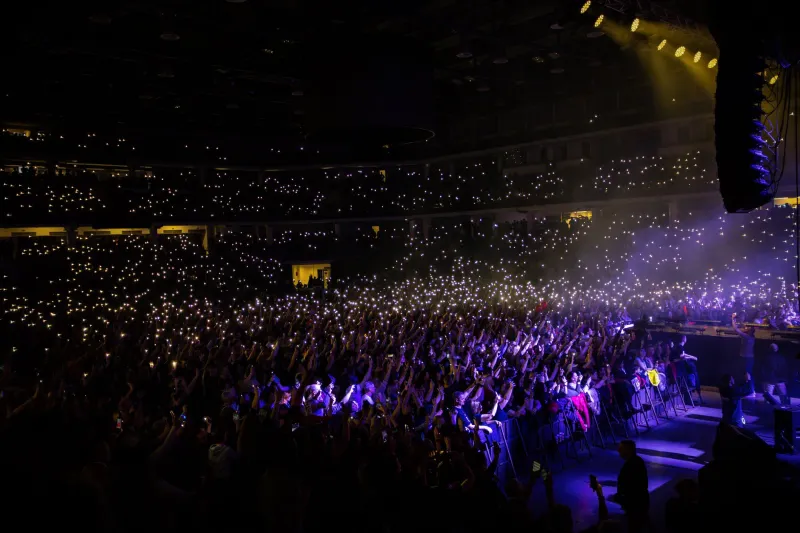
Jordan Kessler, a 24-year-old from Atlanta, had been running a detailed Harry Styles fan theory account for two years when Styles paused during a concert, pointed into the crowd, and made extended eye contact with him. "I know that sounds like nothing," Jordan says. "He probably did it to fifty people that night. But I replayed that five seconds for months. It changed how I thought about myself as a fan."
Then there's the more dramatic version: the unexpected DM. Several fans of smaller celebrities — musicians with mid-size followings, YouTubers, niche actors — have shared stories of receiving direct messages that arrived completely out of nowhere. A cosplayer in Portland got a DM from a voice actor she'd been creating art for. A fiction writer in Chicago was reposted by the author whose work inspired her. In almost every case, the recipients describe a period of disorientation. Joy, yes. But also a strange grief — because once the moment passes, the one-sidedness resumes, and now you know what it felt like when it wasn't.
The Identity Reshuffling That Follows
Here's what doesn't get talked about enough: being acknowledged by your idol doesn't always feel uncomplicated. For many fans, it triggers an identity crisis of sorts.
Before the acknowledgment, the fan's role is clear. You're the devoted one. The watcher. The supporter from a distance. That role carries its own meaning and community — other fans understand it, validate it, share it with you. But once a celebrity has personally reached out, that identity shifts. Some fans describe feeling pressure to "be worthy" of the moment. Others pull back from their fan communities, suddenly self-conscious about the intensity of their previous devotion. A few say the acknowledgment actually made them feel less connected to the celebrity, because the fantasy of what could happen had been replaced by the reality of what did.
Destiny, the Swift fan from Columbus, says she went through something like that. "After the like, I kind of froze up for a few weeks. I didn't post as much. It's like — the hoping was the thing. Once something actually happened, I didn't know what to hope for anymore."
When the Acknowledgment Becomes an Obsession of Its Own
Not every fan retreats. For others, the acknowledgment becomes fuel — proof that devotion can be rewarded, and motivation to double down. Fan communities often treat these moments as near-mythological events. Screenshots get shared, analyzed, and archived. The fan who received the shoutout gains status within the group. And the broader community absorbs the story as evidence that their collective effort matters.
This isn't necessarily unhealthy. Fandom has always run on hope and shared meaning. But it's worth noting that celebrities and their teams are not unaware of this dynamic. Strategic fan engagement — the calculated like, the surprise concert moment, the occasional reply to a dedicated account — is increasingly understood as a brand management tool. That doesn't make the emotional experience less real for the fan receiving it. But it does mean the "spontaneous" acknowledgment is sometimes less spontaneous than it appears.
What It Actually Means to Be Seen
At the end of the day, what fans are really chasing in these moments isn't fame or access. It's validation. The feeling that the thing you've poured yourself into actually registered somewhere — that your devotion created a ripple that reached the other side.
And sometimes, genuinely, it does. Some celebrities are deeply aware of their fan communities and actively moved by what they find there. The acknowledgments aren't always calculated. Sometimes an artist really does stumble across a piece of fan art at midnight and feel compelled to reach out.
But whether the moment is organic or strategic, the emotional truth of it belongs entirely to the fan. What you do with that moment — whether it frees you, freezes you, or sends you deeper into devotion — says a lot about what the fandom was giving you in the first place.
And honestly? There's no wrong answer. Being devoted was never really about getting something back. The payback, when it comes, is just a bonus.