Bleeding Your Team's Colors While They're Bleeding You Dry: What Your Sports Loyalty Really Says About Your Heart
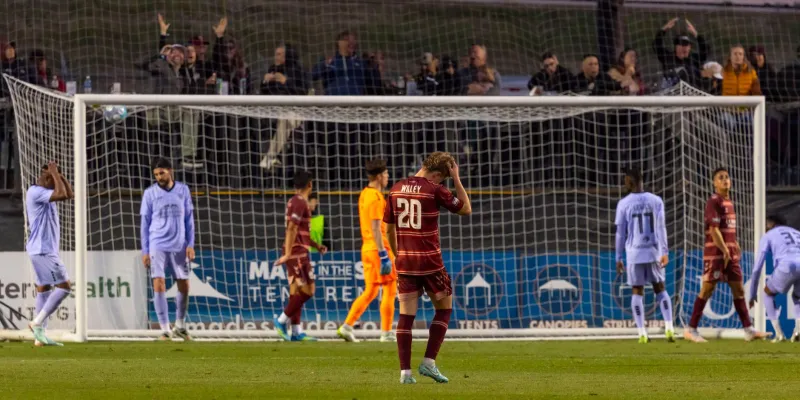
Let's establish the scene. It's Week 14. Your team is 3-10. Your starting quarterback looks like he learned to throw during a blackout. The head coach is one press conference away from being escorted out of the building by security. And yet — and yet — you are still watching. You are still wearing the hoodie. You are still texting your group chat defensive statistics that don't really hold up under scrutiny.
Congratulations. You might be the most romantically capable person in America. Or you might be completely delusional. The line, it turns out, is razor thin.
The Loyalty Test You Didn't Know You Were Taking
Here's the thing about sports fandom that nobody talks about enough: it's the purest, most unfiltered loyalty stress test available to the modern human. You don't choose your team the way you choose a Netflix subscription. For most Americans, that allegiance got handed to you like a family heirloom — maybe it was your dad's team, your city's team, the franchise whose cap you wore in your kindergarten photo. You didn't opt in after careful deliberation. You were enrolled.
And now, decades later, when the roster is a mess and the front office is making decisions that would get a regular person fired from a Wendy's, you have a choice: stay or go.
What you do in that moment? That's the data point. That's the thing that tells us everything.
The Fair-Weather Fan: A Portrait in Self-Preservation
Let's not be cruel about this. There's a very understandable human impulse behind fair-weather fandom. When things go badly — when the Cubs were still the Cubs, when the Browns were being the Browns, when the Sacramento Kings were doing whatever the Sacramento Kings do — some people quietly start rooting for whoever is currently winning. They find reasons. Well, I always had a soft spot for this other team. My cousin lives in that city. I respect the organization.
This is the sports equivalent of suddenly becoming very interested in your ex's attractive friend approximately three weeks after a breakup. Technically explainable. Deeply revealing.
Fair-weather fans are not bad people. But they are telling on themselves. What they're demonstrating is that their loyalty was always conditional — a transaction, not a commitment. They were in it for the wins, the vibes, the championship parade energy. The moment the return on investment dried up, so did the devotion. Sound familiar? It should. Because a lot of us date exactly the same way.
The Die-Hard: Noble Idiot or Evolved Romantic?
On the other end of the spectrum lives the true loyalist. The person who watched the Detroit Lions for years — years — before a single playoff win materialized and still showed up every Sunday like it was a religious obligation. The long-suffering Cubs fan who waited 108 years and wept actual tears in 2016 like they'd personally been vindicated by the universe.
There's something genuinely moving about this kind of devotion. It's not contingent on performance. It doesn't require reciprocity in the traditional sense. The team is not going to call you back. The team does not know your name. And yet you persist.
Psychologists actually have a name for the cognitive framework that makes this possible: it's tied to identity fusion — the degree to which a group's identity becomes inseparable from your own. When your team loses, you feel it as a personal loss. When they win, it's a shared triumph. You're not watching a sporting event. You're watching a proxy version of yourself compete.
Which, if you think about it, is exactly how the most devoted partners describe long-term relationships. When you hurt, I hurt. When you win, we win. That's not co-dependency. That's — okay, sometimes it's co-dependency. But sometimes it's love.
The Rationalization Olympics
One of the most entertaining things about hardcore sports fans is the elaborate intellectual architecture they build to justify continued devotion during rough patches. You've heard the speeches. We're rebuilding. The young talent is promising. The division is weak this year, so technically—
This is not delusion. Well, it's not only delusion. It's the human mind doing what it does best: protecting an emotional investment by constructing a narrative that makes the investment still feel reasonable.
Sound familiar? It should, because you have done this exact thing in at least one relationship. You catalogued the green flags aggressively. You explained away the red ones. You told your friends you don't understand the full picture when they gently suggested maybe this person wasn't great for you. You were, in essence, a fan of someone who was going through a very long losing streak, and you were absolutely certain the turnaround was coming.
Sometimes it does. That's the cruel part. Sometimes the rebuild actually works. Sometimes the team wins the Super Bowl and you get to feel like your loyalty was the variable that mattered. And sometimes — often — the losing just continues, and you have to decide at what point devotion becomes something you owe yourself the honesty to walk away from.
So What Does It Actually Mean?
Here's the uncomfortable truth that Are You Devoted? exists to surface: staying loyal to a bad team doesn't automatically make you a good romantic partner, and jumping ship doesn't automatically make you shallow. What matters is why you're doing it.
If you stay because leaving feels like a betrayal of your identity, your family history, your sense of self — that's worth examining. Relationships built on obligation rather than genuine connection have a pretty grim long-term outlook, whether we're talking about the New York Jets or a person you've been seeing for three years.
If you leave because you were only ever in it for the good times — also worth examining. The capacity to sit with someone (or something) in difficulty, without guarantees, without immediate reward, is genuinely rare. It's also genuinely necessary if you want a love that lasts past the honeymoon phase.
The sweet spot — the thing that actually maps onto healthy, sustainable devotion — looks something like this: you stay because the core of what you love is real, you're honest about what's not working, and you don't require constant winning to justify your continued presence. You can say this is hard right now and I'm still here without losing yourself in the process.
The Verdict
Your sports loyalty is a mirror. It's not a perfect one — nothing in life is a perfect mirror, which is something your team's front office has clearly never been told — but it reflects something true about how you handle attachment when the scoreboard isn't in your favor.
The fans who stay through the ugly years, not out of inertia but out of genuine, eyes-open commitment? They tend to be the people who also show up in relationships when things get complicated. They've practiced the thing most of us avoid: loving something that isn't currently giving you a reason to.
And the ones who bounce the second the magic fades? Well. They're not wrong that winning feels better. They're just maybe not ready for the kind of love that requires you to stay on a Sunday in December when the score is 34-7 and there are still eight minutes left in the fourth quarter.
But hey. At least they know it about themselves now.
That's what we're here for.