Who Rides the Hardest? A Definitive Power Ranking of the Most Loyal Fan Armies in Pop Culture
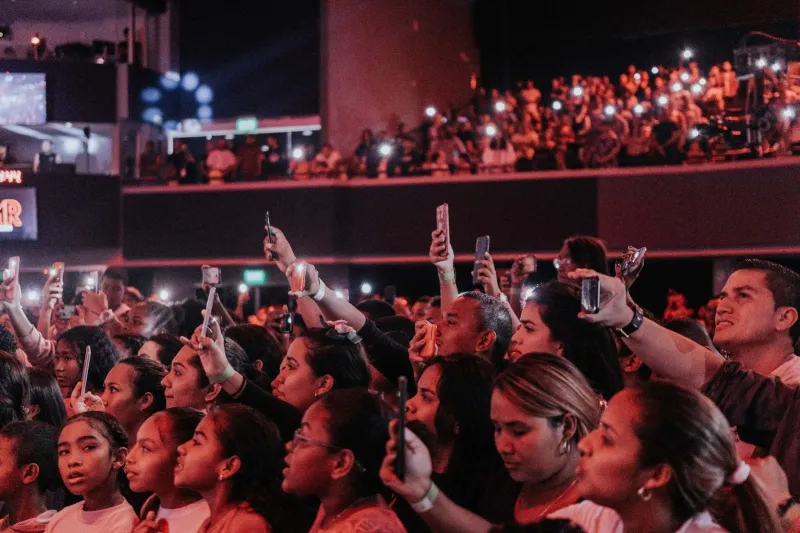
Let's be honest — calling yourself a fan is easy. You follow the Instagram, you hum along at the gym, maybe you own one (1) piece of merch. But then there's a whole other tier of human being. The kind who camps outside a stadium for 72 hours, who organizes charity fundraisers in their idol's name, who has a dedicated stan account with 40,000 followers and posts at 3 a.m. with the urgency of a breaking news anchor.
At Are You Devoted, we live for that second type. And we got curious: which fandoms actually go the hardest? We're ranking the most intense, most loyal, and most culturally impactful fan communities out there — and digging into why some people catch a feeling that never quite lets go.
What Even Makes a Fandom "Elite"?
Before we get into the ranking, let's talk criteria. Raw enthusiasm alone doesn't cut it. We're measuring fan communities on a few key dimensions: organizational power (can they mobilize quickly and effectively?), cultural footprint (do they move the needle in mainstream conversation?), longevity (are they still showing up years later?), and emotional investment (how deeply personal does the devotion get?).
With that framework in place, here's where things get interesting.
Tier 1: The Untouchables
BTS ARMY — The Gold Standard of Fandom Infrastructure
If fandom were a corporation, BTS ARMY would be the Fortune 500 entry that makes everyone else look like a lemonade stand. With an estimated 90+ million members worldwide — a huge chunk of them based right here in the US — ARMY operates less like a fan club and more like a decentralized global movement. They've crashed ticketing websites, trended topics internationally within minutes, and raised hundreds of thousands of dollars for causes ranging from Black Lives Matter to disaster relief, often matching donations made in BTS's name.
What makes ARMY uniquely powerful is the reciprocal devotion loop. BTS has been unusually transparent about their own emotional struggles, their gratitude, their fear of failing the people who love them. That vulnerability invites fans into something that feels less like celebrity worship and more like a genuine relationship. Superfan Jenna R., a 28-year-old from Chicago, put it plainly: "I've made my closest friends through ARMY. It stopped being about the music pretty fast — it became about the community."
Swifties — The Fandom That Runs on Code-Breaking and Capitalism
Taylor Swift's fan base is arguably the most culturally dominant in American pop right now, and the Eras Tour proved it in dollar signs. Swifties don't just consume — they analyze, theorize, and create. The Easter egg industrial complex that Taylor has built around her releases means fans are constantly engaged, always hunting for clues, always rewarded for paying close attention.
What sets Swifties apart from other massive fandoms is the sheer economic force they wield. The Eras Tour generated an estimated $4.6 billion in consumer spending across US cities. Local economies felt it. Hotels sold out. Friendship bracelet bead supplies ran dry nationwide. When a fan base can literally move macroeconomic indicators, you're in a different conversation entirely.
Tier 2: Legendary and Enduring
Deadheads & Phish Phans — The OG Long-Haul Devotees
Before "stan" was a verb, Deadheads were following the Grateful Dead from city to city, building an entire traveling subculture around the music. That tradition lives on with Phish fans today. These communities invented the idea of the live experience as spiritual practice — the setlist speculation, the lot scene, the tape trading. Decades of consistent devotion without a single viral moment driving it. That's earned.
Marvel Stans — The Franchise Faithful
The MCU fan base has turned franchise loyalty into an art form. These are people who rewatch post-credit scenes frame by frame, who construct elaborate fan theories that sometimes turn out to be correct, and who show up opening weekend with a dedication that Hollywood studios have built their entire release strategies around. The emotional investment in characters like Tony Stark or Natasha Romanoff borders on grief when those arcs end — and that's not hyperbole. Therapists reported upticks in clients processing feelings after Avengers: Endgame.
Beyhive — Loyalty With Standards
Beyoncé's fan base is intense in a specific, refined way. The Beyhive doesn't just celebrate their queen — they protect and enforce. Cross the Hive on social media and you'll find out quickly. But beyond the meme-able moments, this community reflects something deeper: for many Black women in America, Beyoncé represents visibility, excellence, and cultural pride in a way that transcends entertainment. That emotional weight makes the devotion feel less like fandom and more like identity.
Tier 3: The Passionate and the Persistent
Sports Fan Bases — The Green Bay Packers & Duke Basketball Nation
Sports fandom deserves its own category because the stakes are different. You can't control the outcome. You can't Easter egg your way to a championship. Green Bay Packer fans literally own shares of the team — a unique arrangement that makes the devotion financial and communal simultaneously. Duke basketball fans (the Cameron Crazies) have turned student section behavior into a national story every single season. Sports loyalty is often inherited, geographic, and deeply tribal. It hits different.
Supernatural Fandom — A Case Study in Never Letting Go
The Supernatural fandom ran for 15 seasons and still hasn't stopped. Even after the finale aired, fan conventions kept selling out. Fanfiction communities remained active. The show's two leads have spoken openly about how the fan base shaped the direction of the series. This is what sustained creative devotion looks like — a community that doesn't just consume a story but participates in extending its life.
The Psychology Behind the Passion
So what's actually going on in the brain when someone becomes a superfan? Researchers point to a few consistent factors. Parasocial relationships — the one-sided emotional bonds we form with public figures — activate many of the same neural pathways as real friendships. When a celebrity shares something vulnerable, our brains don't fully distinguish between that and a personal confidence from a friend.
There's also the role of identity fusion — the process by which a fan's sense of self becomes genuinely intertwined with the group. Being a Swiftie or a member of ARMY isn't just something you do on weekends. It becomes part of how you introduce yourself, how you make friends, how you process the world.
And then there's community. In a country where loneliness has been called an epidemic, fandoms offer belonging. They offer shared language, shared rituals, and shared emotional experiences. That's not trivial. That's genuinely meaningful.
The Bottom Line
Ranking fandoms is a little like ranking love — messy, subjective, and guaranteed to make someone mad. But here at Are You Devoted, we think the real takeaway isn't about which community wins. It's about recognizing that the impulse to devote yourself to something — to show up, to care deeply, to build something with strangers who get it — is one of the most human things there is.
So whether you're a card-carrying member of ARMY or you've been to every Phish show since 1997, we see you. And honestly? We're a little jealous of how hard you ride.